Petroleum Industry · War Damage · Preliminary Estimate
Strike on the Merefa Oil Refinery: Environmental Impact of the Fire
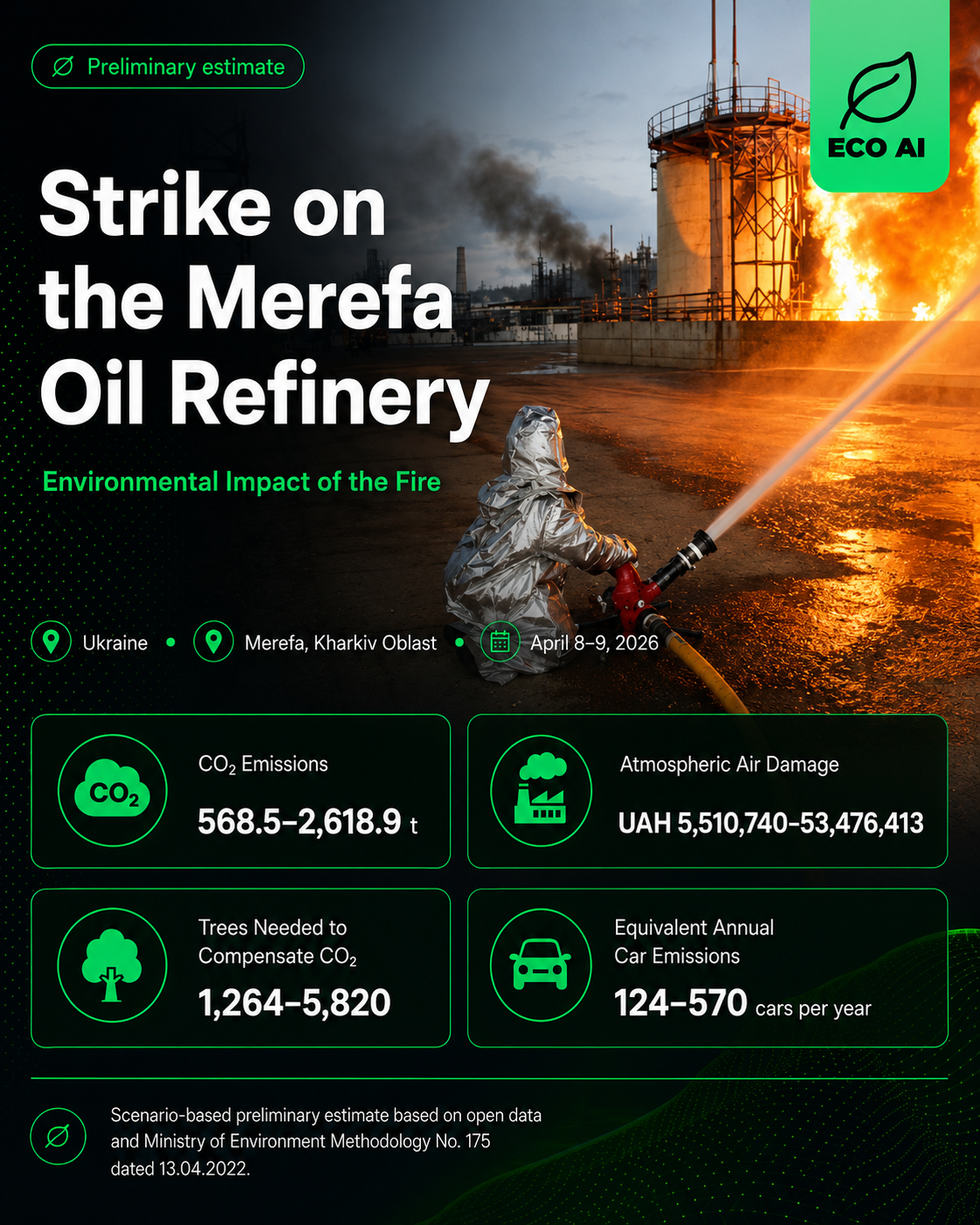
During the night of 8 April 2026, at approximately 1:00 a.m., Russian Shahed-type drones attacked an oil refinery in Merefa, Kharkiv Oblast. The facility sustained significant damage and a large fire broke out on the industrial site. According to reports citing Ukraine's State Emergency Service, the drones struck storage tanks located on the premises. The explosions also damaged four houses and three vehicles in Merefa. No casualties were reported.
Emergency crews continued fighting the fire throughout 8 April. It was fully extinguished only the following morning, meaning that the fire burned for more than a day.
The primary environmental footprint is associated with the combustion of petroleum products, fuel, lubricants, polymers, cable insulation and industrial equipment components. A fire involving these materials can release CO₂, nitrogen oxides, carbon monoxide, volatile organic compounds, soot and fine particulate matter into the atmosphere.
The preliminary calculation uses an estimated industrial-site area of 30,000–100,000 m² and a possible burned area of 5,000–20,000 m². The lower bound reflects localised burning within part of the industrial site and the minimum quantity of fuel and other materials involved. The upper bound represents a larger scenario within the same facility.
The tree figure relates exclusively to notional compensation of the CO₂ footprint, assuming that the trees are planted and maintained for at least 10 years. Trees do not compensate for soot, toxic combustion products, petroleum spills, soil or water contamination, or hazardous industrial waste.
Browse all preliminary environmental damage assessments published by ECO AI.