Healthcare Facility · War Damage · Preliminary Estimate
Strike on the MEDICOM Clinic in Kyiv: Environmental Footprint of the Damage
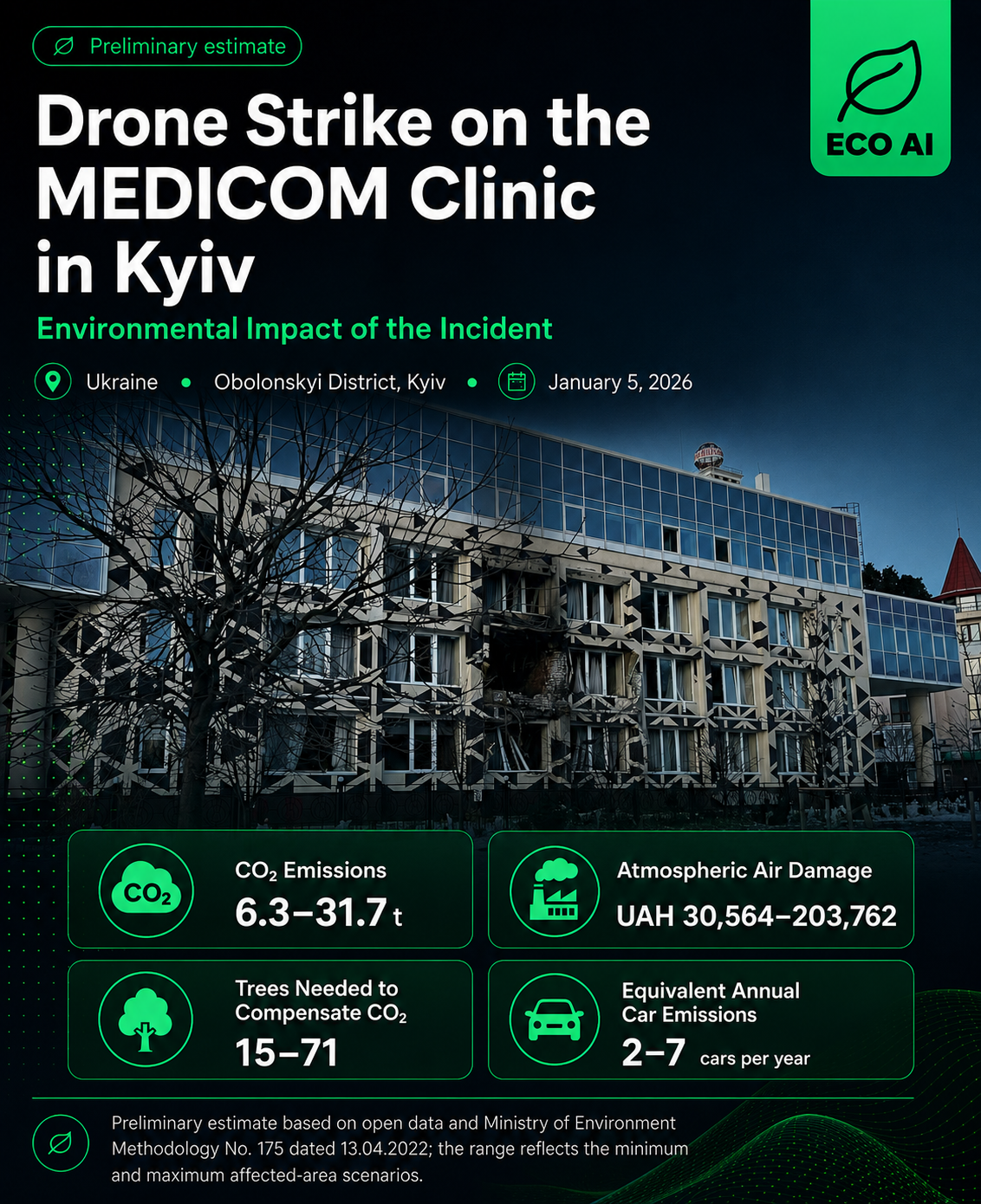
During the night of 5 January 2026, a Russian drone struck the inpatient building of the MEDICOM clinic at 9 Obolonska Embankment in Kyiv. According to the clinic, the impact occurred at approximately 2:40 a.m. The inpatient building and medical equipment sustained significant damage. Ukraine's National Police reported that the drone strike caused a fire, while publicly available photographs show damage to the façade, shattered windows, and extensive debris.
The environmental footprint is associated with the fire, the destruction of structural elements, and damage to the clinic's internal equipment. Potential emissions may have included CO₂, smoke, soot, ash, fine construction dust, and products of incomplete combustion.
Potentially damaged or burned materials may have included furniture, polymer-based medical products, packaging, cable insulation, thermal insulation, disinfectants, and household chemicals.
The scenario assessment uses an estimated object area of 1,500–4,000 m² and a possible burned area of 80–400 m². Open sources do not provide official figures for the exact fire area, burning duration, or mass of materials consumed. The lower bound represents a minimum scenario for the primary damaged object, while the upper bound reflects an extended fire and damage scenario within the same incident location.
The tree figure relates exclusively to the notional compensation of CO₂ emissions, assuming planting and maintenance for at least 10 years. Trees do not remove construction dust, soot, broken glass, medical waste, polymers, chemical substances, or possible soil and water contamination.
Browse all preliminary environmental damage assessments published by ECO AI.